Ayurvedic-remedies-sinus Call Now whatsapp Chat on WhatsApp

What Exactly Is Sleep Apnea? (And Why Ayurveda Looks at It Differently)

Modern medicine defines sleep apnea as repeated pauses in breathing during sleep — sometimes for seconds, sometimes close to a minute — happening again and again through the night.
Common symptoms include:

  • Loud, habitual snoring
  • Morning headaches
  • Waking up tired despite a full night in bed
  • Dry mouth or scratchy throat
  • Irritability, mood swings, or foggy thinking

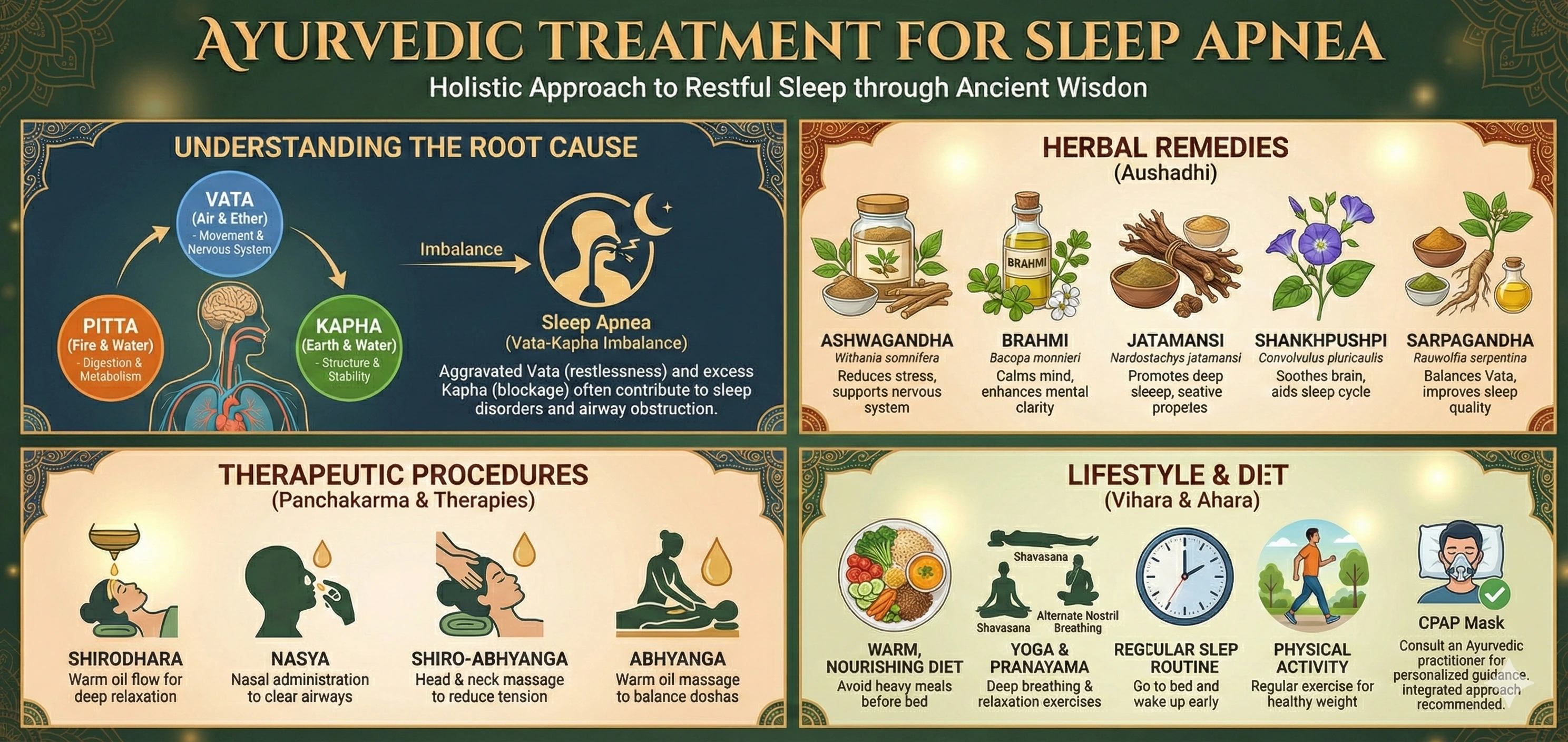
Ayurveda takes this further by reading these symptoms as deeper imbalances:

  • Vata disturbance :irregular breathing patterns
  • Kapha excess : heaviness, mucus buildup, blocked airways
  • Low Agni : sluggish digestion and toxin accumulation
  • Prana disruption : impaired mind-body harmony
Diet tips to prevent sinus

Instead of managing symptoms, Ayurveda aims to restore balance at every level — breath, digestion, nerves, and sleep rhythm.

Why Ayurveda Works for Sleep Apnea

Ayurvedic Treatment for Sleep Apnea

Ayurveda doesn’t force your breathing to improve — it gently retrains the body to function as it was meant to.
It helps by:

  • Clearing nasal and throat blockages
  • Strengthening respiratory muscles
  • Easing stress-triggered apnea episodes
  • Supporting oxygen flow
  • Detoxifying the channels
  • Resetting hormonal and sleep cycles

This is why more health-conscious individuals are looking beyond machines and toward natural, sustainable healing.

Key Ayurvedic Treatments for Sleep Apnea

Nasya Therapy — The Crown Jewel of Respiratory Healing

If your nose has a habit of blocking the moment you lie down, Nasya therapy for sleep apnea can feel like a breath of fresh air — literally.
Herbal oils like Anu Taila or Shadbindu Taila are gently administered into the nostrils.

Benefits:

  • Relieves congestion
  • Reduces snoring
  • Opens up airway passages
  • Strengthens the nervous system
  • Promotes deeper sleep

Nasya therapy

Many Ayurveda hospitals — including Patanjali Wellness Vishwachetana Yoga and Research Centre — begin treatment with Nasya for good reason.

Herbal Medicines: Nature’s Respiratory Support System

Herbal Medicines Nature’s Respiratory Support System

Ayurveda relies on time-tested herbs to relax the mind, open the airways, and regulate breath.
Top Ayurvedic remedies for sleep apnea include:

  • Ashwagandha – calms nighttime stress, balances cortisol
  • Brahmi – soothes the mind, helps initiate deeper sleep
  • Punarnava – reduces fluid retention (great for Kapha-heavy apnea)
  • Tulsi & Pippali – clear mucus and strengthen lung function
  • Trikatu – boosts digestion and prevents toxin buildup

These herbs don’t knock you out — they help your system reset.

This is why more health-conscious individuals are looking beyond machines and toward natural, sustainable healing.

Panchakarma Detox for Long-Term Relief

When toxins (Ama) clog respiratory channels, sleep apnea often intensifies. Panchakarma acts like a total system cleanse.
Common therapies include:

  • Vamana – removes excess Kapha and mucus
  • Virechana – reduces inflammation and clears Pitta
  • Shirodhara – calms mental overactivity
  • Abhyanga + Steam – relaxes muscles, supports easier breathing

Many patients notice lighter breathing and better oxygen flow after completing these therapies.

Panchakarma Detox for Long-Term Relief

Ayurvedic Breathing Exercises for Sleep Apnea

Ayurvedic Breathing Exercises for Sleep Apnea

Your breath can be your most potent nighttime medicine.
Try adding:

  • Anulom Vilom – balances Vata, smoothens breath cycles
  • Bhramari Pranayama – reduces stress-induced apnea
  • Ujjayi Breath – strengthens upper airway muscles
  • Sheetali – cools the system for restorative sleep

Just 10 minutes each night can make a meaningful difference.

This is why more health-conscious individuals are looking beyond machines and toward natural, sustainable healing.

A Realistic Ayurvedic Healing Timeline

One question almost everyone asks: “How long will it take to feel better?”
A typical progression looks like this:

  • 1–2 weeks:less snoring, easier breathing
  • 3–5 weeks:better sleep quality, reduced fatigue
  • 6–12 weeks:deeper sleep, fewer apnea episodes
  • Long-term:stable breathing with lifestyle support

Ayurveda shines in long-term healing because it rebuilds the foundation.

Realistic ayurveda healing

Diet & Lifestyle: Ayurveda’s Sleep Blueprint

Diet & Lifestyle Ayurveda’s Sleep Blueprint

Your breath at night reflects your choices during the day.

Foods that help:

  • Warm, freshly prepared meals
  • Steamed vegetables
  • Ginger, fennel, cumin
  • Turmeric milk with a pinch of nutmeg
  • Light dinners before 7:30 PM

Avoid:

  • Heavy, oily dinners
  • Dairy at night
  • Cold drinks
  • Late-night meals
  • Alcohol (it tightens throat muscles)

Simple daily habits:

  • Sleep on your left side
  • Keep a consistent sleep schedule
  • Reduce screens an hour before bed
  • Take a mild evening walk to reduce Kapha

Do You Need an Ayurvedic Doctor for Sleep Apnea?

Short answer? Yes.
An Ayurvedic doctor for sleep apnea evaluates:

  • Your unique constitution (Prakriti)
  • Dosha imbalances
  • Sleep patterns
  • Breathing difficulties
  • Stress levels
  • Digestive strength

Doctor consultation

That detailed personalization is why specialized centers like Patanjali Wellness Vishwachetana Yoga and Research Centre see such strong results.

Author image
About Author

Dr. Raghavendra Y, BAMS, MD (Kayachikitsa), Ph.D. (Pursuing) is the HOD and Chief Medical Officer at Patanjali Wellness – Vishwachetana Yoga and Research Centre, Hubballi. With over a decade of experience in Ayurveda, teaching, and research, he has guided multiple postgraduate scholars and received accolades like the Best Dissertation Award (2014–15) and Arogya Ratna Award (2018–19). His ongoing Ph.D. focuses on Dashamoola Rasayana in COPD. Renowned for his expertise in psoriasis, stress, and kidney health, he integrates Ayurvedic wisdom with modern science in holistic patient care.

Related Articles

Finding the Right Therapy for Your Unique Needs

Revitalize with Steam Bath Therapy at Our Wellness Center

Experience Panchkarma in Ayurveda for Body-Mind Renewal

FAQ

Can Ayurveda really cure sleep apnea naturally?

Yes. Ayurveda focuses on restoring balance in Vata and Kapha, clearing nasal blockages, improving digestion, and calming the nervous system. Many patients experience major improvements using Ayurvedic treatment for sleep apnea without depending solely on machines.

What is the best Ayurvedic treatment for sleep apnea in India?

Common treatments include Nasya therapy for sleep apnea, Panchakarma detox, Ashwagandha-based herbal medicines, and Ayurvedic breathing exercises. At specialized centers like Ayurveda clinics in Hubli, personalized plans ensure better results.

Does Nasya therapy help reduce snoring and breathing pauses?

Yes. Nasya therapy for sleep apnea opens nasal passages, reduces congestion, and strengthens upper airway muscles — all of which help reduce snoring and nighttime breathing pauses.

Which Ayurvedic herbs are good for sleep apnea?

Herbs like Ashwagandha for sleep apnea, Brahmi, Punarnava, Pippali, Tulsi, and Trikatu help reduce stress, improve airflow, and support better sleep quality.

How long does Ayurvedic treatment for sleep apnea take to show results?

Most people notice improvements within 1–2 weeks (less snoring), deeper sleep in 4–6 weeks, and sustained relief after 8–12 weeks of consistent Ayurvedic therapy.

Do I need an Ayurvedic doctor for sleep apnea diagnosis?

Absolutely. An experienced Ayurvedic doctor for sleep apnea evaluates Prakriti, Dosha imbalance, stress factors, digestion, and breathing patterns to design a root-cause treatment plan.

BOOK MY APPOINTMENT